3 Common Techniques Used to Control Legionella: A Beginner’s Guide
- craigtawc
- Oct 19, 2025
- 3 min read
Legionella bacteria can exist in virtually all types of water systems—from small domestic setups to large, complex commercial installations. When left unchecked, it can multiply rapidly under the right conditions, increasing the risk of Legionnaires’ disease, a potentially serious form of pneumonia.
Every water system carries potential risk factors that can encourage bacterial growth. While smaller systems may present a lower inherent risk, larger and more complex systems tend to carry higher levels of risk due to their design and usage patterns.
Regardless of size, both types of systems require effective control measures and ongoing review by a qualified Legionella risk assessor. The more complex the system, the more comprehensive the control strategy must be.
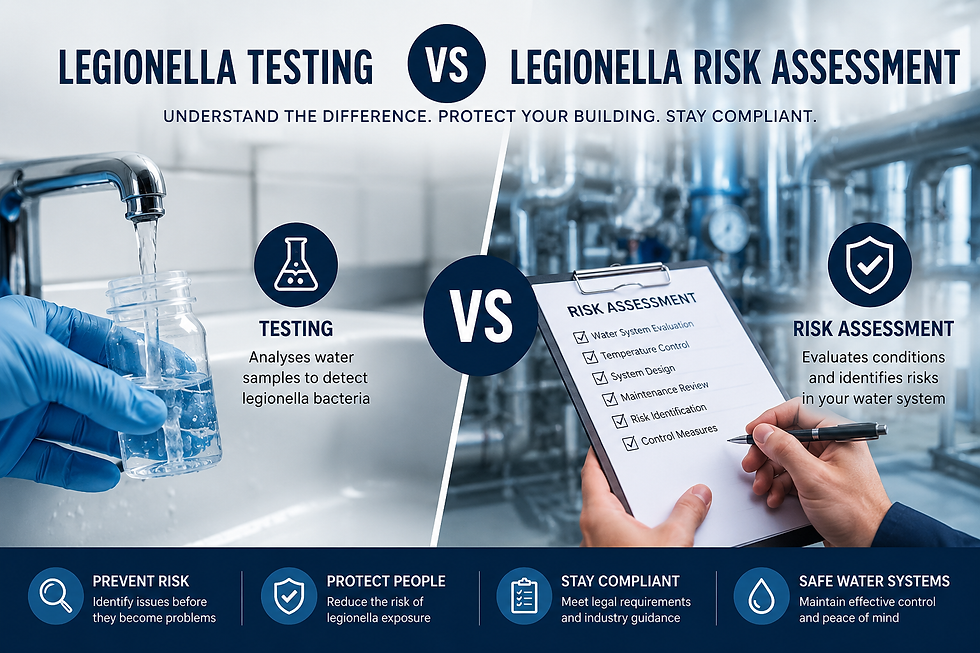
Although routine sampling for Legionella bacteria isn’t always required—since it is often assumed that small amounts of bacteria may be present—testing becomes particularly important in high-risk or complex systems to verify that control measures are functioning effectively.
Below, we explore three of the most common and effective techniques used by professional Legionella risk assessment companies to control bacterial growth and maintain compliance with UK regulations.
1. Temperature Control
Controlling water temperature is one of the most reliable and widely used methods for managing Legionella. The bacteria thrive in water temperatures between 20°C and 45°C. By keeping water outside this range, either too cold or too hot, bacterial growth can be significantly reduced or completely eliminated.
Here are the key temperature guidelines for effective control:
Cold water should be stored and distributed at temperatures below 20°C.
Hot water should be stored at 60°C or above and distributed at 50°C or higher at the point of use.
In systems that use thermostatic mixing valves (TMVs) to combine hot and cold water—for example, at taps and showers—it is crucial to keep pipework lengths as short as possible. This helps reduce stagnation and maintain effective temperature control throughout the system.
2. Avoiding Stagnation
Stagnant water provides ideal conditions for Legionella bacteria to multiply. Ensuring regular and consistent movement of water throughout the system is essential to prevent this.
To avoid stagnation, a range of control measures can be implemented:
Flush little-used outlets on a regular basis.
Identify and remove dead legs (unused sections of pipework) and redundant outlets.
Ensure low-use areas and bypass loops receive adequate water flow.
Regularly check stored water to ensure it is being replenished and not sitting stagnant.
These measures are critical not only in commercial or industrial buildings but also in domestic properties, particularly those with irregular water usage or seasonal occupancy.
3. Keeping the System Clean
Like all living organisms, Legionella bacteria require nutrients to survive. These nutrients can come from various sources, including scale, rust, sediment, biofilm, and other organic matter found within the water system.
Implementing a robust cleaning and maintenance programme helps eliminate these nutrient sources and reduces the risk of bacterial growth. Essential cleaning tasks should include:
Regular cleaning and descaling of shower heads, strainers, taps, and other outlets.
Periodic disinfection of tanks and pipework, especially in higher-risk systems.
Visual inspection of the system to identify and remove debris, corrosion, or biofilm.
Using approved cleaning agents or biocides, administered by trained professionals, ensures effective disinfection without causing damage to the system itself.
Why You Need a Legionella Risk Assessment and Written Scheme of Control
Before implementing any of the control measures mentioned above, it’s vital to conduct a Legionella risk assessment and develop a written scheme of control. Both must be carried out by a qualified and competent professional.
A comprehensive risk assessment will:
Identify all areas within your water system that pose a potential risk.
Recommend practical and tailored control measures in line with HSE ACOP L8 and HSG274 guidance.
Ensure your Legionella management plan meets all current UK legal requirements.
Attempting to manage Legionella risks without a proper assessment could leave you exposed to both health hazards and legal liability. The risk assessment forms the foundation of any safe and effective Legionella control strategy.
Stay Safe and Compliant with Expert Support
Controlling Legionella is about more than just meeting legal obligations—it’s about protecting the health and wellbeing of staff, visitors, and customers. Whether you're managing a small office, a healthcare facility, or a multi-site operation, ensuring proper water hygiene should always be a priority.
At Absolute Water Compliance, our experienced Legionella risk assessors deliver practical, compliant solutions tailored to your specific needs. We help you create and implement a water safety strategy that keeps your system safe, compliant, and efficient.
📞 Call us today on 01226 491133
📧 Email: support@absolute-water.co.uk


Comments