Understanding Legionella in the UK: Trends, Risks, and Prevention in 2026
- craigtawc
- Mar 9
- 2 min read
Legionella, the bacteria responsible for Legionnaires’ disease, remains a critical public health concern in the UK. While cases are relatively rare, outbreaks can have severe consequences, particularly for older adults, those with underlying health conditions, and residents of large buildings. In 2026, several trends are shaping how UK authorities, building managers, and the public respond to this threat.
1. UK Legionella Case Trends
The UK Health Security Agency (UKHSA) reported 472 cases of legionella in England and Wales in 2024, representing a 22% decrease from 2023. However, the disease continues to disproportionately affect older adults (60+), who account for approximately 64% of cases.
Scotland has also seen elevated numbers, with 57 cases recorded in 2024, the highest since 2013. This underscores the ongoing importance of monitoring and prevention.
Key Takeaways:
Legionnaires’ disease primarily affects older adults and immunocompromised individuals.
Even with decreasing trends, vigilance is necessary to prevent localised outbreaks.
2. Increasing Regulatory Scrutiny
In the UK, legislation and guidance from the Health and Safety Executive (HSE) mandate that employers, landlords, and building managers assess Legionella risk and implement control measures.
Recent trends show:
More frequent inspections in workplaces, care facilities, and public buildings.
Enforcement of compliance in water management systems, particularly in older or high-risk structures.
Legal repercussions for non-compliance, with some companies fined heavily for failing to protect residents.
Why this matters: Building managers and property owners cannot ignore Legionella prevention failure to comply can result in serious health risks and legal consequences.
3. Risks in Buildings and Construction
The UK’s aging building stock, coupled with stagnant water in unused plumbing, creates ideal conditions for Legionella growth. Outbreaks are most commonly associated with:
Hospitals and care homes
Student accommodation
New or renovated buildings
Construction projects and renovations that disrupt water systems are a common trigger. Ensuring water temperature control, flushing protocols, and disinfection are implemented is critical.
4. Travel-Associated Legionnaires’ Disease
Another concern in the UK is travel-associated cases, where British tourists contract Legionnaires’ disease abroad. Hotels, cruise ships, and resorts are the most common exposure sites.
Authorities are increasingly advising travellers to be aware of Legionella risks and recommending that hotels maintain high water hygiene standards.
5. Responsibilities of Landlords and Employers
Under UK law, both landlords and employers must ensure safe water systems:
Employers must assess and manage risk in workplaces.
Landlords must ensure properties do not pose Legionella risks, even if routine testing is not always required.
Failure to act can result in legal liability, particularly if tenants or employees become ill due to exposure.
6. Prevention Strategies
Preventing Legionella growth in UK buildings revolves around good water management practices:
Maintain water temperatures outside the 20–50°C “danger zone.”
Regularly flush unused taps and outlets.
Disinfect water systems as recommended.
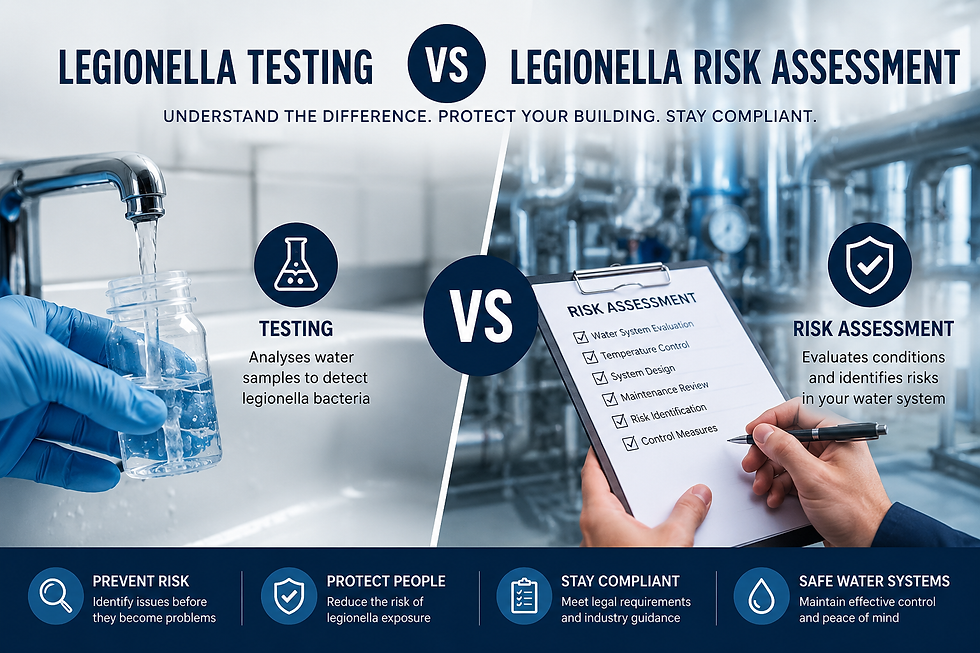
Conduct routine risk assessments and document procedures.
Legionella remains a serious but manageable threat in the UK. With aging infrastructure, increased regulatory scrutiny, and emerging smart technologies, building managers and public health authorities have powerful tools to reduce risk. Awareness, compliance, and proactive water system management are the keys to protecting residents, employees, and visitors from this potentially deadly bacteria.


Comments